Start with the garment label, then choose the layer.
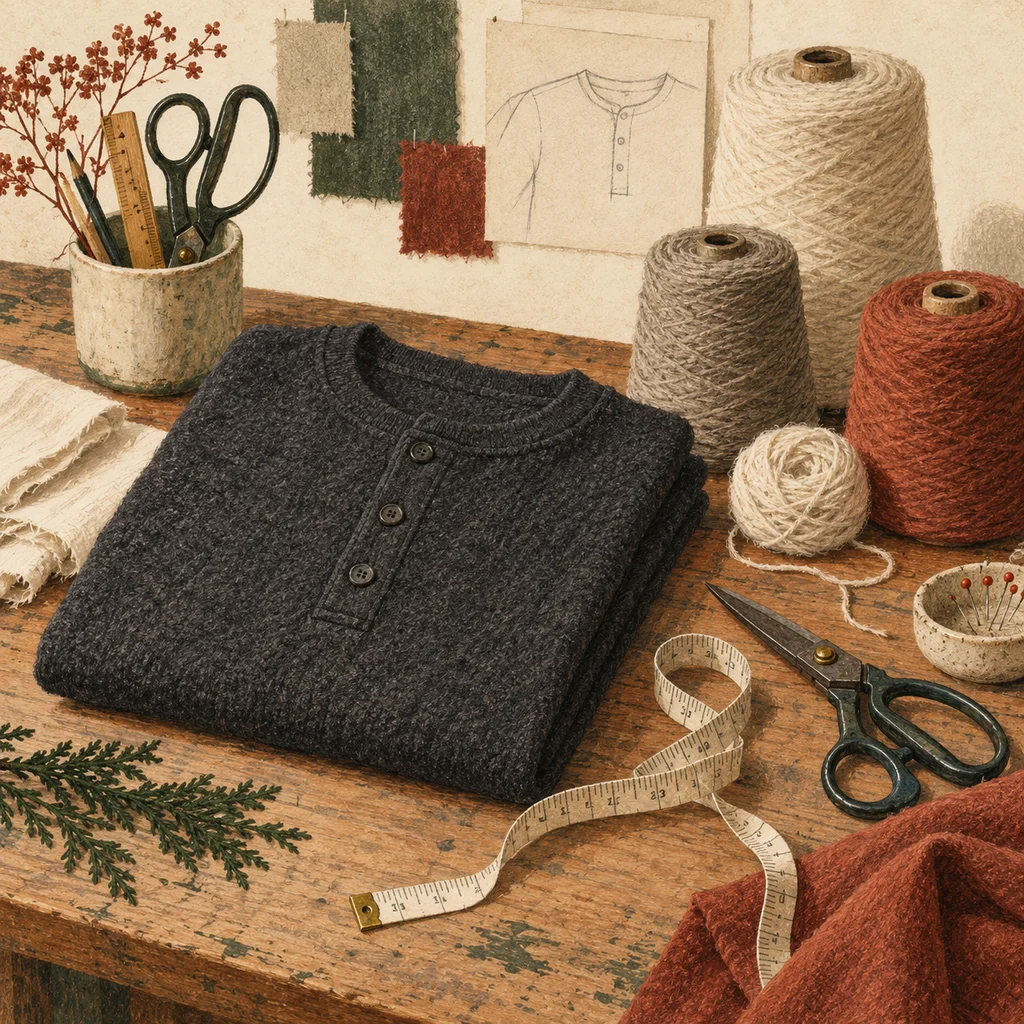
Stanfield’s offers everyday underwear and wool layers from a long-running Truro manufacturing business. The two selected listings explicitly carry Made in Canada labels; that evidence does not cover every item in its catalogue.
Clothing staples with Canadian cut-and-sew production at the centre.
Founders Julie and Jeremy built Province of Canada around local clothing manufacture. Its official pages list two Toronto shops and a custom-garment programme.
Canadian-designed basics with overseas manufacture explained separately.
Kotn’s Canadian-apparel page describes design in Toronto and manufacture in Egypt and Portugal. Its current help page also includes Turkey among its manufacturing locations.
An Atlantic clothing brand with a specific local-made line to inspect.
East Coast Lifestyle sells hoodies, crewnecks and tees from a Halifax shipping operation. Its Made in NS Hoodie has an explicit Nova Scotia manufacture claim; the wider catalogue needs separate origin checks.
Hand-knits connecting outport makers with a St. John’s shop.
NONIA is a Newfoundland nonprofit craft business with a network of home knitters and an official online shop. Its adult sweater and accessory collections offer practical clothing while preserving a distinct social-enterprise history.
Local sayings on clothing, plus a clear route for group merchandise.
Saltwater Designs is a Newfoundland clothing and gift business offering a sayings collection and custom group merchandise. Its former retail shop has closed; the website describes online ordering and pickup in Paradise.
Canadian garment production, seen through fabric and everyday layers.
The shop formerly known as Muttonhead now presents itself as MTN.HEAD. It offers its own clothing alongside selected other brands, with Toronto and Collingwood storefronts.
A Montréal clothing studio with a stated repair route beyond the initial purchase.
Anne-Marie and Catherine founded atelier b in 2009. The studio describes its own clothing collections as made in Montréal and offers a repair service alongside its quality guarantee.
A Montréal running brand with cap families that differ in fit and construction.
ciele athletics identifies Montréal as its headquarters. Its story starts with a cap and develops into a wider sportswear range; the Canadian shop makes its headwear families easy to compare.
A Montréal bag brand with clear separation between design and manufacturing evidence.
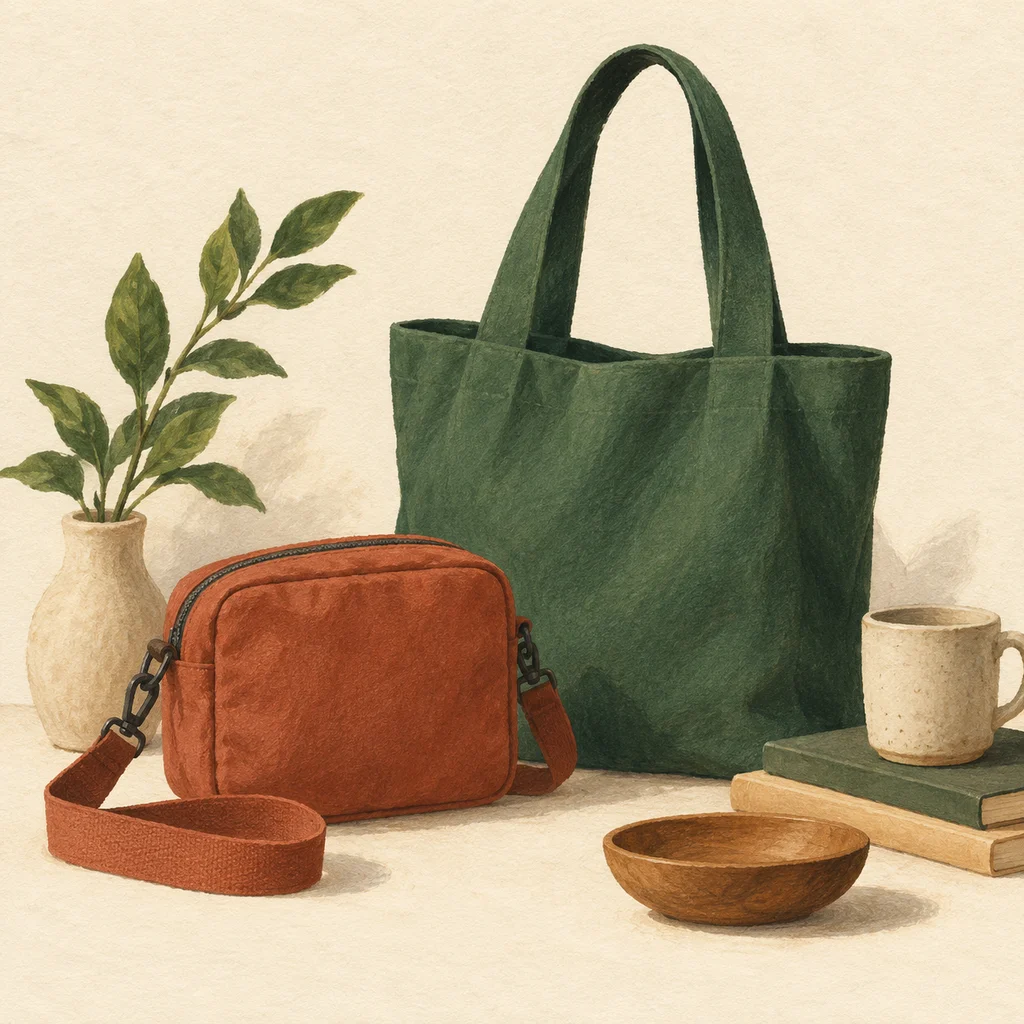
Mélissa Lambert founded the Montréal brand in 2017. Its range includes handbags and totes described by the maker as vegan leather, with dimensions and composition to check on each selected style.
Start with the materials and ask what the artisans can make now.
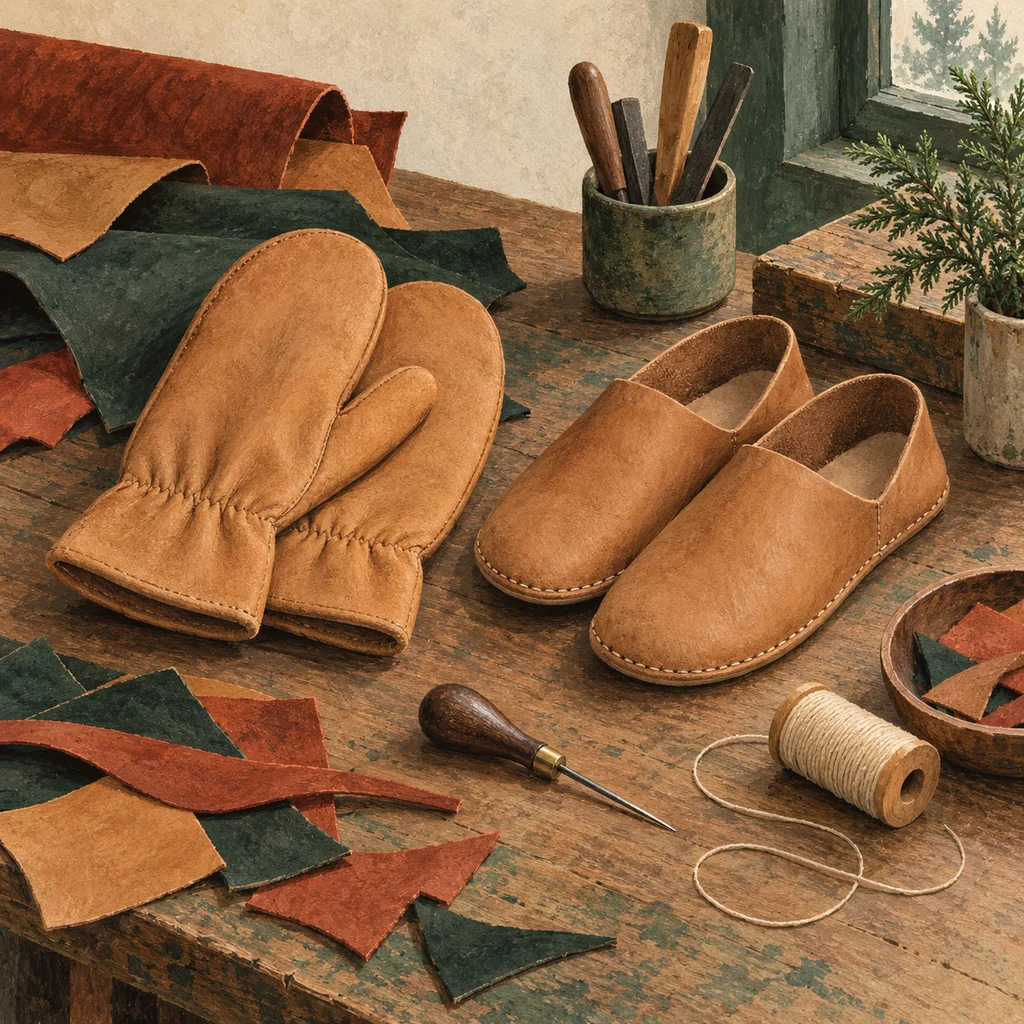
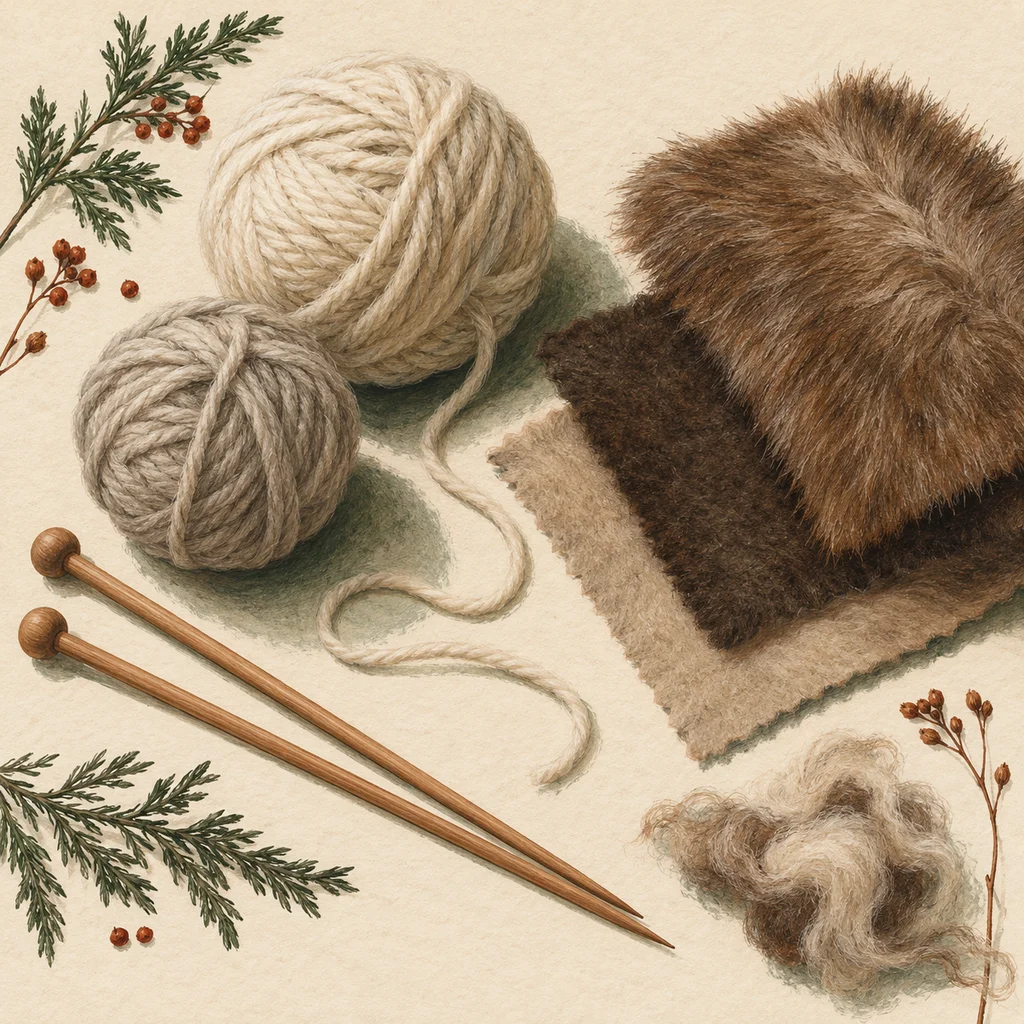
Dene Fur Clouds is a Fort Providence artisan business making knitted fur garments and accessories. Its published mittens and scarf listings describe sheared beaver materials, while availability needs checking.
A Whitehorse brand with practical fit questions to ask before ordering.
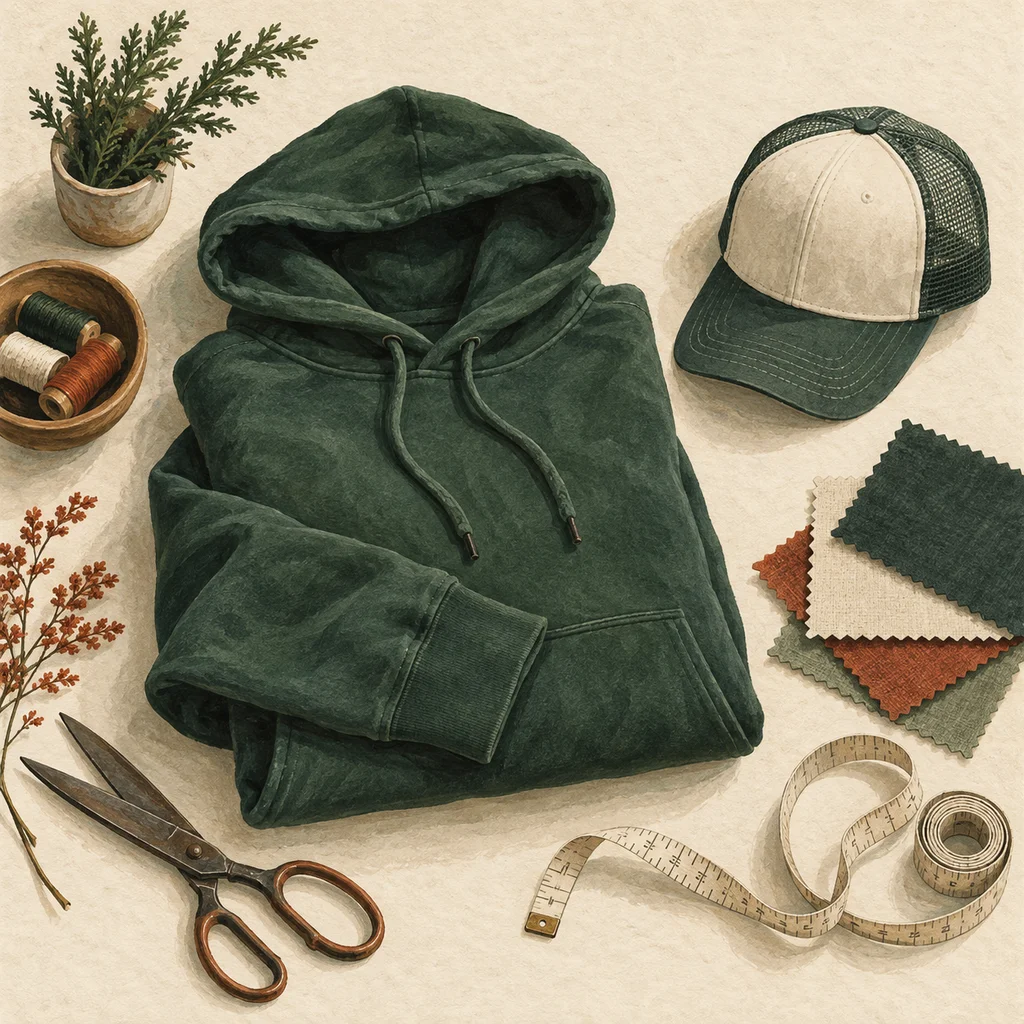
Brothers Myles and Tanner started Yukon Built in 2017. Its Whitehorse shop and online catalogue offer original hoodies and trucker hats; the reviewed pages do not confirm where these garments are manufactured.
Check the origin on the exact hat, then check its fit.
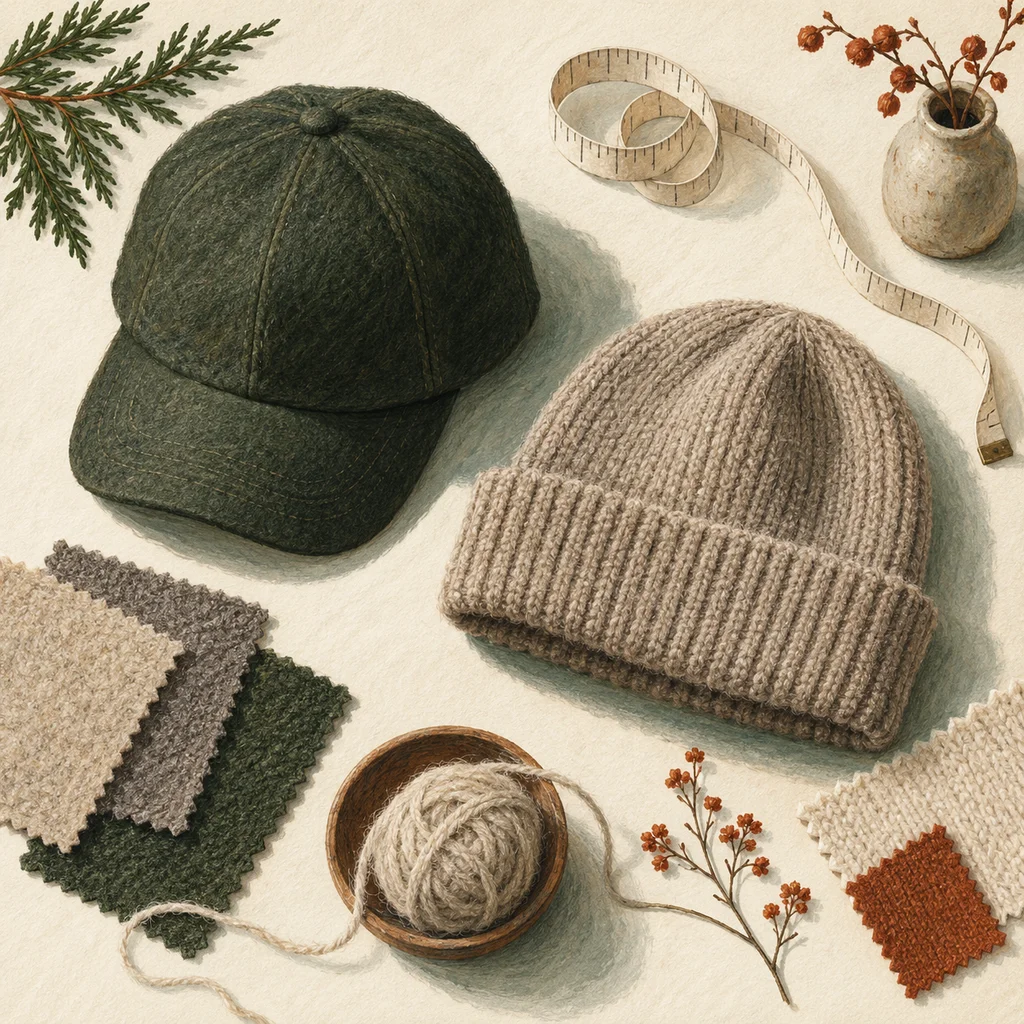
Crown Cap traces its Winnipeg headwear business to 1934. Its current homepage identifies selected railroad hats and wool beanies as made in Canada, a claim that should be checked item by item.
A Winnipeg footwear brand with manufacturing origins explained in its FAQ.
Manitobah identifies Winnipeg as its founding city and headquarters. Its indoor-slipper and waterproof-boot families are distinct from Indigenous Market pieces, and the company states that most main-range manufacturing is international.
Two bag families with a Quebec workshop connection.
The MAMA collection is the brand's diaper-bag route, while adjustable belt bags provide a smaller carrying format. Compare the selected bag's measurements, opening, strap arrangement and care directions rather than assuming every bag solves the same problem.
A Montreal atelier, with manufacture checked by garment.
Eve Gravel operates a Montreal atelier. Its homepage lists SMOKE tops and SAMMIE pants, while an older official knit-family page describes a Peru workshop collaboration.
A tee and a manufacturing brief have different ordering rules.
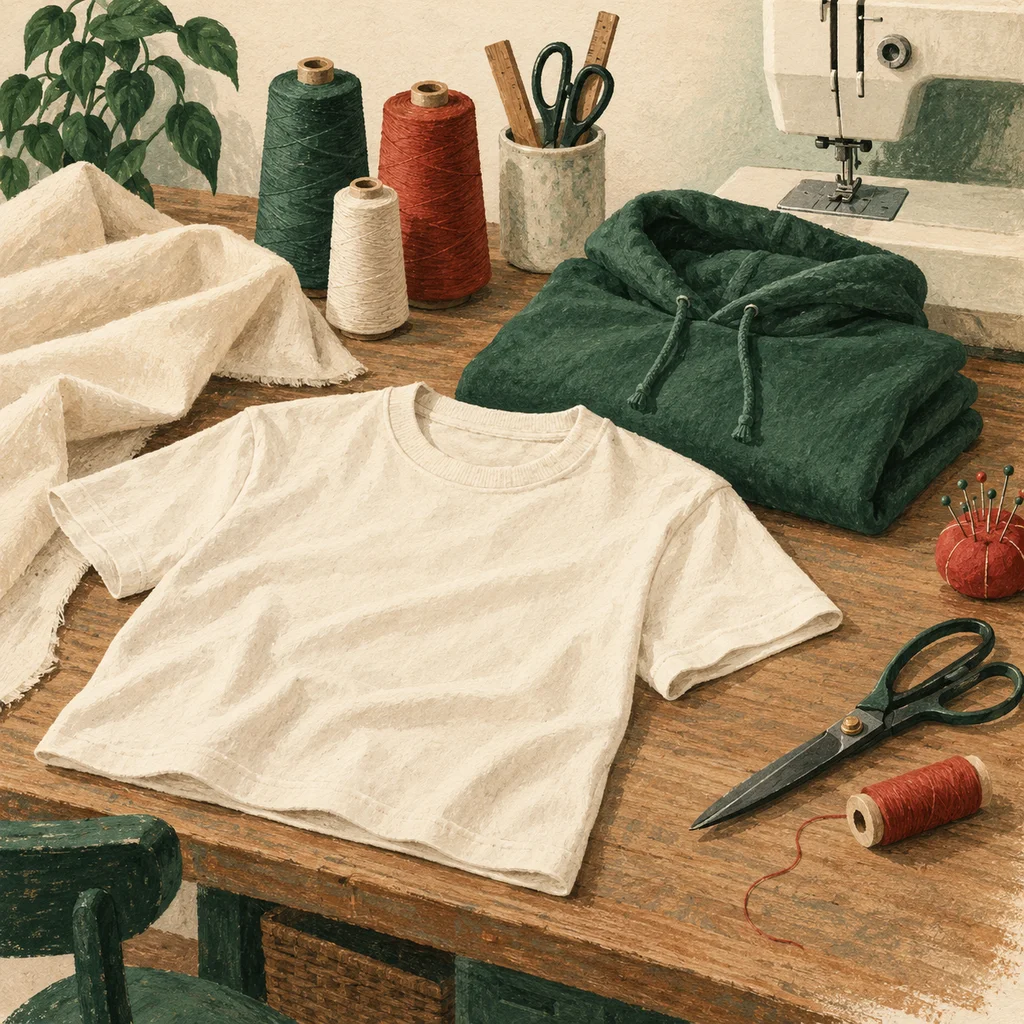
Redwood Classics shows both an individual garment and a production service. The Avens tee, model W1012, is described as a Canadian-made, 100% slub-cotton scoop-neck tee with a longer body.
Canadian sewing with the fabric's origin kept visible.
Outclass began with Matteo's graphic-design school project and grew into a clothing business with Rebecca, his life and business partner. The official story names fabric mills in Spain, Portugal, Italy and Japan, while describing Canadian knitting, dyeing, cutting and sewing for cotton-slub pieces.
Fabric weight, fit and unavailable variants stated plainly.
House of Blanks describes its connection to Toronto's Roopa Knitting Mills, a nearby dyehouse and sewing operation. Its product pages turn that factory story into concrete specifications.
A cargo trouser and a layer, compared beyond collection names.
Good For Sunday describes garments milled, dyed, cut and sewn in Toronto. A useful introduction is one detailed garment and a separate collection route.
Choose the fabric and layering room before the size.
Boreal Mountain Anoraks traces its beginning to an outer layer made from a salvaged military blanket, followed by a 2016 company debut. Its official story says garments are constructed in Quebec.
Saskatoon printing is explicit; the blank garment’s sewing origin is a separate question.
Hardpressed’s official story follows a Saskatoon printing business from a basement press to a local shop. Selected tees provide fabric and care details, with design and printing in Saskatoon established for the Berry Pie listing.
Raber identifies its family glove business and hand production in Manitoba. The official inquiry page describes Garbage Mitts and Arctic 3 mitts, while the company says it does not sell directly to the public.
From leather-accessory beginnings to Montreal clothing.
Cokluch's official story begins with friends Christine and Laurie making recycled-leather accessories, then developing clothing produced locally in Montreal. The current storefront uses CHLO.